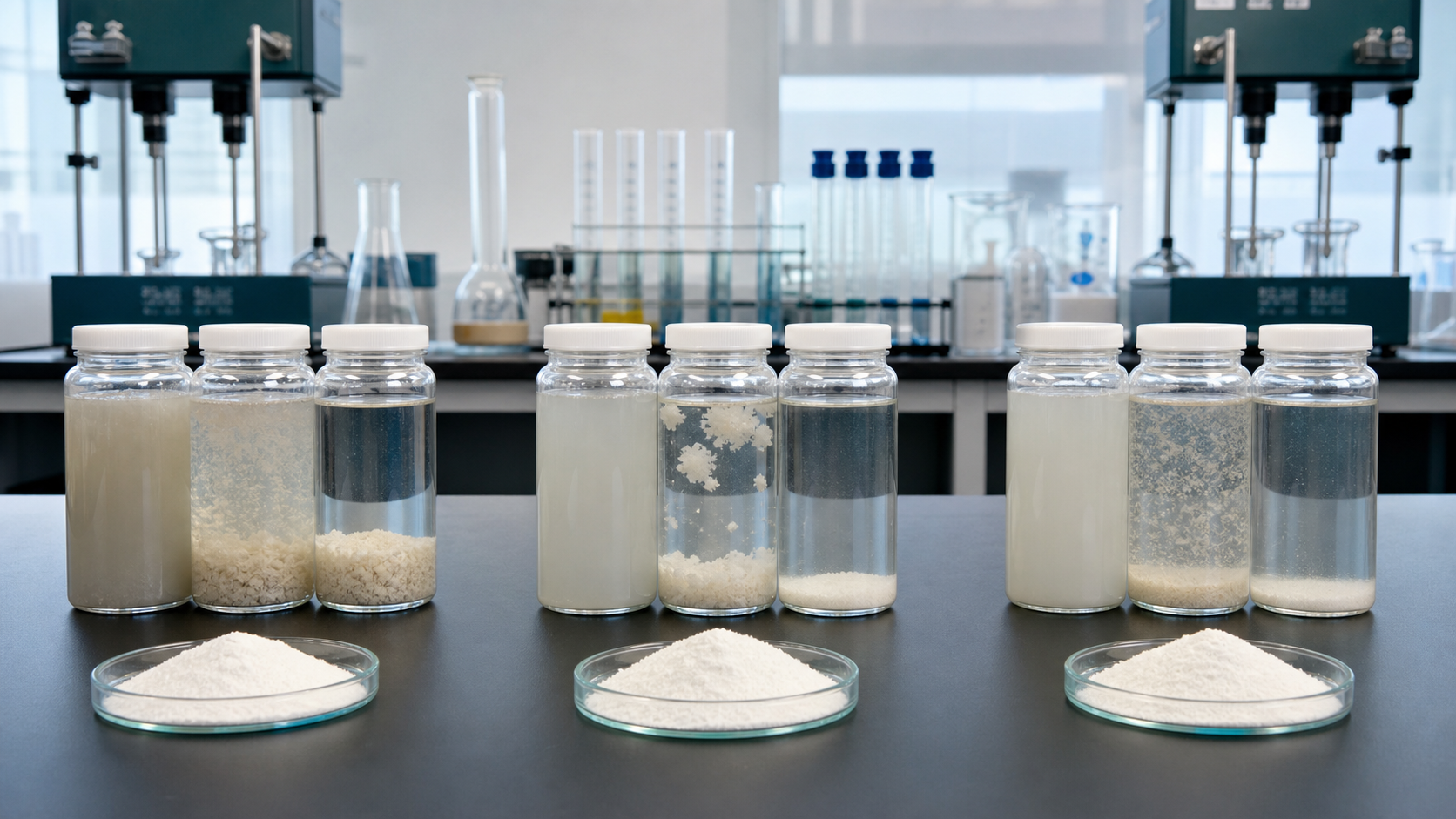
Vegetable wash water can carry both mineral soil and organic debris, with the mix changing between crops, suppliers and washing conditions. A flocculant sample request should represent that variation. Do not assume that the polymer selected for one crop or one soil source will remain suitable when the wash line changes its raw material.
Describe the washing and collection route
Identify the product being washed, the main solids-removal steps and the point where PAM would be added. Record whether the stream is fresh wash water, recycled water or a blend. Keep separate samples where the solids or chemistry are meaningfully different before agreeing a combined screening programme.
The sample collection guide helps avoid sending only the easiest part of the flow. Record sample time, storage and visible settling. Ask which sample volume and handling conditions are needed for the proposed evaluation instead of shipping a bottle whose representativeness is unknown.
Define what recovered water may be used for
Tell the supplier where treated water goes and which team approves that route. Separation of suspended solids does not establish suitability for food contact or every form of reuse. Maintain the site's required treatment and quality controls, and seek use-specific product documentation where applicable rather than relying on a generic wastewater application statement.
Provide this boundary to Xinqi Polymer when requesting candidates. The anionic polymer range may inform mineral-solids screening, while the actual mix of soil and organic material must determine the comparison. A crop name is not a product specification.
Test the useful operating range
Compare overflow quality and sediment or float handling, depending on the separation equipment. Include representative changes in solids loading and preparation water where they occur during normal production. Keep mixing, solution age and dose reporting consistent so a difference between candidates is not simply a difference in test preparation.
Record any requirement imposed by screens, filters or storage downstream. A visually improved sample may still load a filter excessively or create difficult solids. Ask operators to define these constraints before the trial, and retain observations from a meaningful operating period rather than just the first successful batch.
Keep the sample order limited to its purpose
Name each candidate and the reason for requesting it. Separate the screening quantity from a possible production purchase, and state what evidence will permit the next release. If a new crop or washing programme falls outside the tested conditions, review the selection. This protects the purchasing decision from becoming an unsupported promise that one flocculant handles every future seasonal feed.