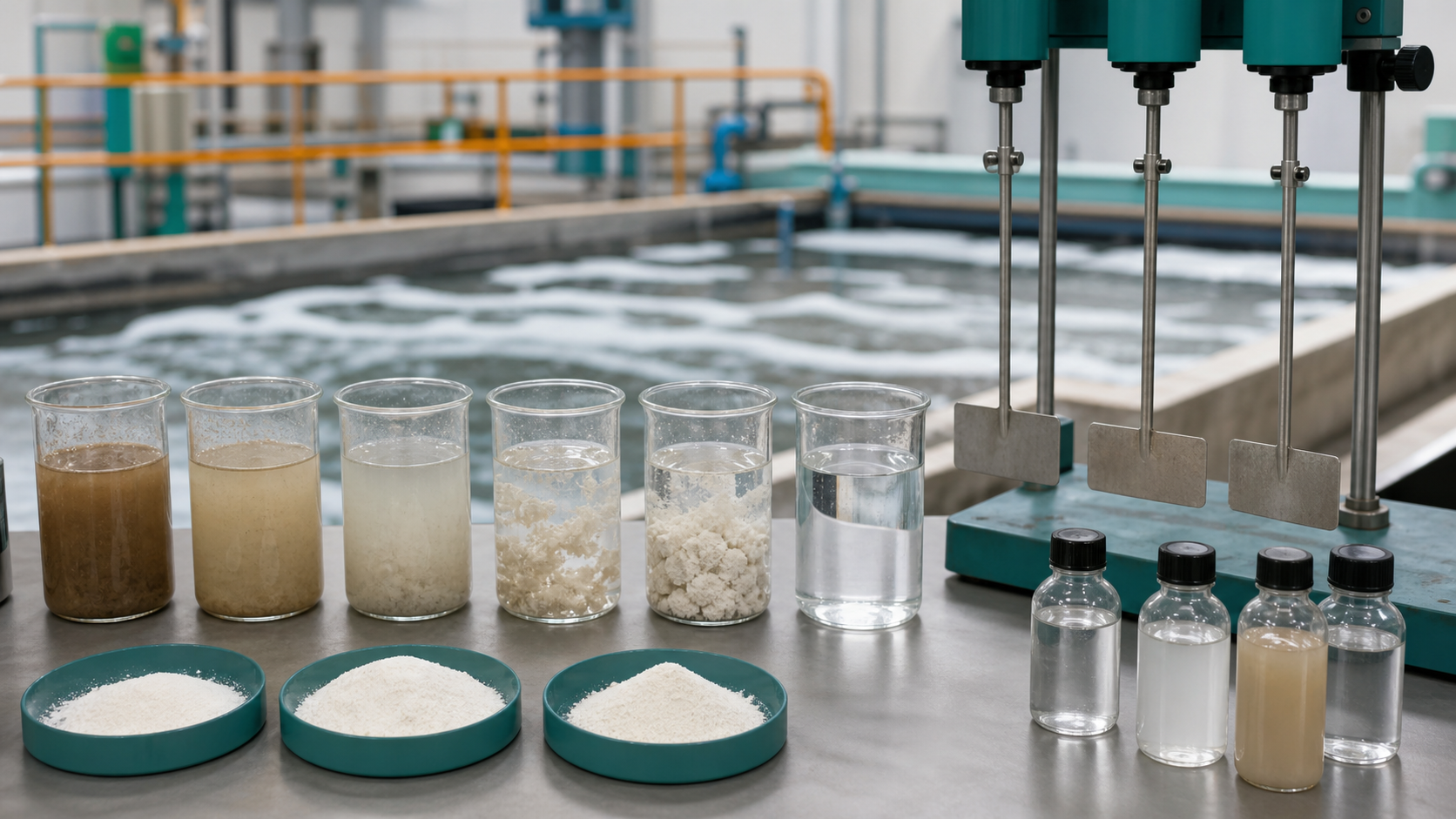
Paper-mill effluent flocculant purchasing should identify the wastewater duty separately from on-machine retention or other papermaking chemical uses. A product that works in one part of the mill is not automatically the correct product for another. Define the solids stream, separation equipment and downstream treatment before requesting a PAM recommendation or production quotation.
Name the water circuit precisely
Describe where the wastewater is collected, which upstream solids are recovered and whether the sample includes cleaning or grade-change water. Record significant fillers, process additives and chemical carryover known to the treatment team. A broad description such as paper water does not tell a supplier which interactions or feed variations need evaluation.
Keep samples from distinctly different operating conditions identifiable. If the effluent combines several circuits, explain the normal blend rather than expecting the laboratory to infer it. Note whether the current problem is fine-solids capture, unstable flotation, settling or a downstream handling burden.
Specify the separation result that matters
Define the accepted liquid quality for the next treatment stage and the way recovered solids are handled. Fibre capture alone may not describe the remaining fines or the effect on subsequent equipment. Include the measurements and operating observations that the plant actually uses to judge success, without inventing a universal limit for all mills.
Discuss the chemical compatibility checks with Xinqi Polymer when requesting samples. A review of anionic PAM products can support candidate selection, but the offered grade should be evaluated within the mill's real chemical programme.
Separate a polymer improvement from a production change
Record production grade, feed flow, upstream chemical settings and solids handling during the trial. A comparison made across a major production change may not isolate the flocculant effect. Keep a current-treatment reference where practicable and align consumption with the operating period used to assess the liquid and solids results.
Document preparation conditions and any equipment changes made by the supplier during the test. If the successful result requires a different dosing or dilution arrangement, include that requirement in the purchasing review. Do not approve a product against temporary equipment while assuming the existing installation will reproduce the same result.
Make the award specific to the wastewater duty
Record the named grade, sample identity, approved conditions and any restrictions on substitution. Keep the effluent product specification distinct from other polymer purchases at the mill. This reduces the risk of an administrative product-name mix-up and makes later performance questions easier to investigate against the correct application and trial evidence.