Jar testing turns polymer selection into evidence
The best PAM grade is the one that performs on your water. Jar testing compares ion type, molecular weight, dose, mixing sequence, and settling performance before plant-scale trials.
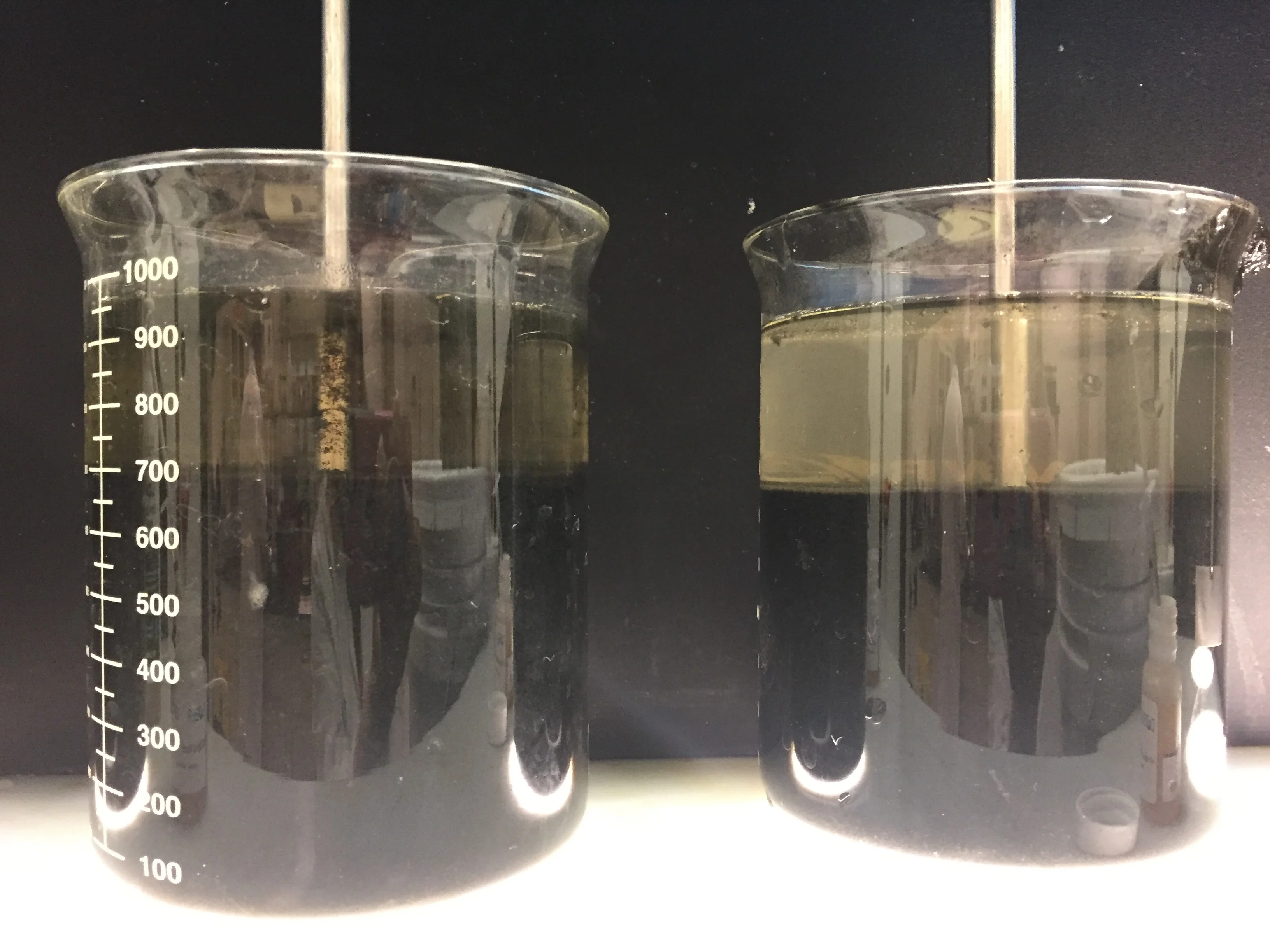
Basic test setup
- Use fresh, representative water or sludge samples.
- Prepare polymer stock solution with full hydration time.
- Test at least three dose levels per candidate polymer.
- Keep mixing energy and settling time consistent across jars.
- Record turbidity, settling speed, floc size, and sludge behavior.
What to observe
| Observation | Likely meaning | Next action |
|---|---|---|
| No visible floc | Wrong ion type, low dose, poor hydration, or missing coagulant. | Confirm make-down and test another polymer family. |
| Floc forms but breaks | Shear sensitivity or low floc strength. | Try higher molecular weight or change mixing point. |
| More dose worsens clarity | Overdosing or charge reversal. | Build a finer dose curve around the lower range. |
| Clear water but wet sludge | Clarification is working but dewatering chemistry is weak. | Run a separate CPAM sludge conditioning test. |
Moving from jar to plant
Scale-up requires more than copying the jar dose. Check dilution water, make-down equipment, injection point, mixing energy, hydraulic retention time, and downstream shear. A polymer that works in a gentle jar can fail after a high-shear pump.
After testing, use supplier support to request samples aligned with your water chemistry and equipment.