Reviewed
Mining Process Water Flocculation and PAM Selection
Mining water circuits depend on fast solids separation. A good PAM program improves overflow clarity, recovers reusable water, reduces pond loading, and helps thickeners operate with fewer emergency corrections.
Understand the solids before choosing polymer
Mining process water may contain clay, silt, tailings fines, flotation residue, dissolved salts, and recycled-water chemistry that changes over time. The same ore body can produce different settling behaviour as the mine plan changes. A product that worked during one operating period may become less effective when feed mineralogy, grind size, or process additives change.
The first step is a simple solids behaviour review. Operators should note natural settling, particle fineness, water colour, pH, conductivity, and whether solids compact or stay fluffy. This information guides the first polymer screen and prevents overreliance on a single product name.
Anionic PAM is often the first screen
For mineral-rich water, anionic polyacrylamide is often the starting point because high molecular weight bridging can aggregate fine inorganic particles. However, the best grade depends on charge density, molecular weight, slurry concentration, mixing energy, and water chemistry. A very strong product may make large floc in a jar but break in a thickener feed well.
Procurement teams can review broader polyacrylamide manufacturers, while plant teams should focus on controlled trials. A polyacrylamide manufacturer should be able to provide multiple anionic options for side-by-side comparison rather than one generic recommendation.
Make the jar test reflect plant reality
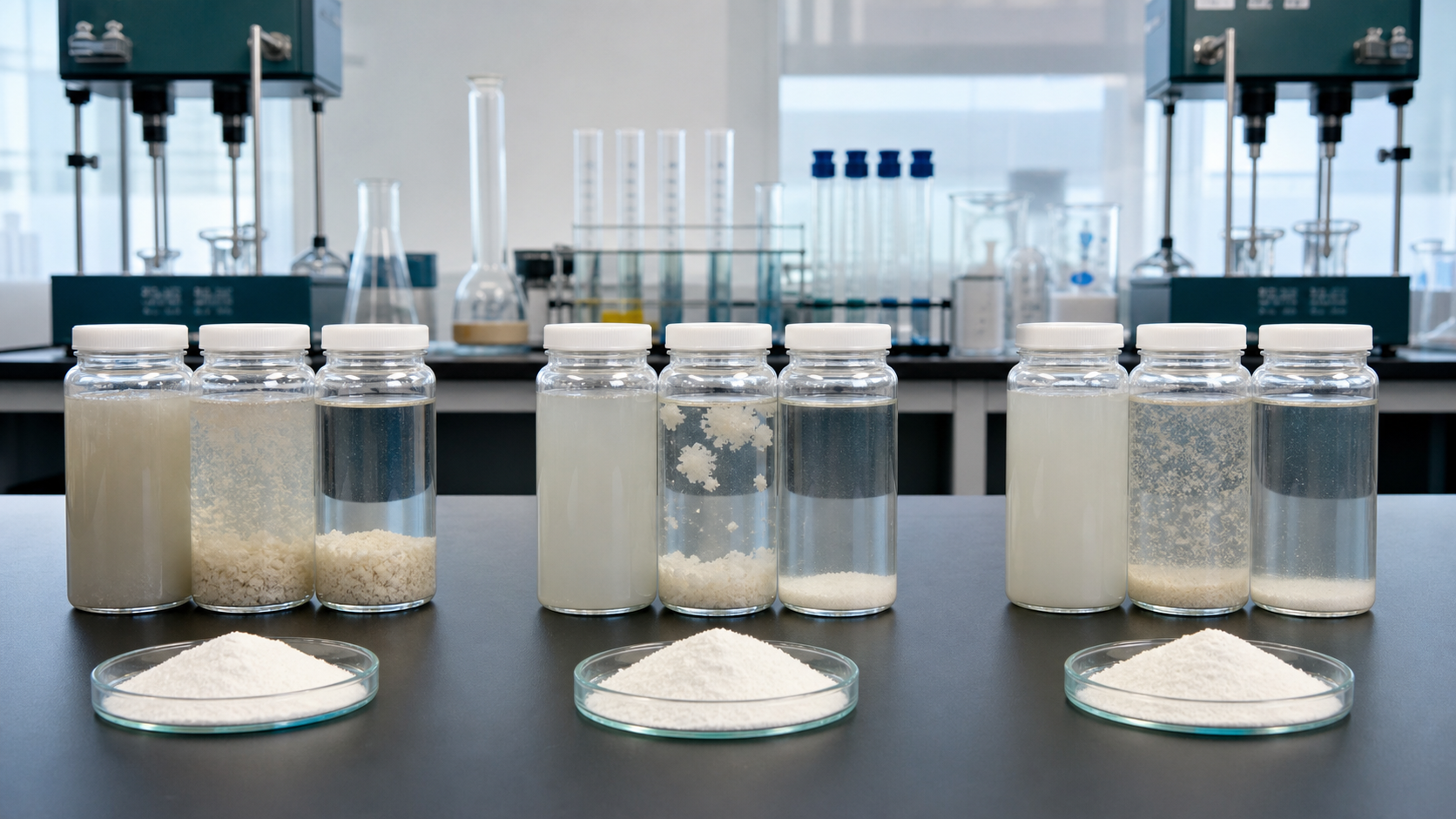
A mining jar test should record initial floc formation, settling rate, supernatant clarity, underflow density, and floc resistance after gentle disturbance. If the plant has short retention time, the test should not depend on long overnight settling. If the thickener uses high-energy feed mixing, the test should include a shear check.
Water recovery is often the economic driver. Clear overflow can return to the process, reduce fresh-water demand, and lower pond load. But if the underflow becomes too thin or too bulky, downstream pumping and deposition can suffer. The best PAM dose balances clarity and solids handling.
Keep supplier support tied to operating data
Mining plants should keep a record of dose, feed solids, overflow turbidity, mud bed level, rake torque, and underflow density. This record makes supplier support more useful because it turns a complaint into a technical problem that can be solved. Product changes should be tested against the same data points.
Flocculation is a practical water-recovery tool in mining. It works best when polymer selection, plant hydraulics, and solids handling are treated as one connected program.