Reviewed
Anionic, Cationic, and Nonionic Flocculants
The right PAM family depends on particle charge, solids type, salinity, organic loading, and the final treatment goal.
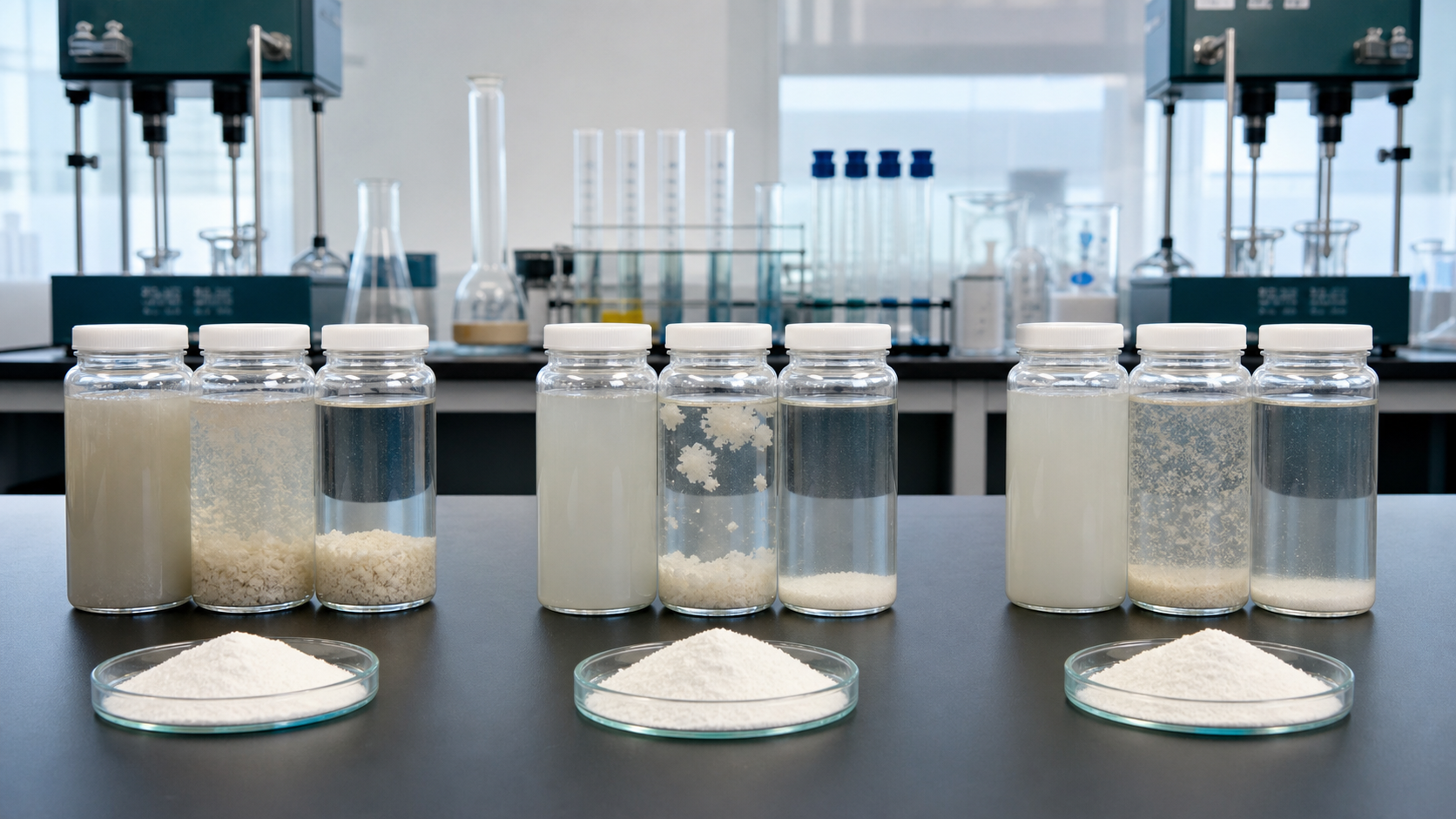
Anionic polyacrylamide
Anionic polyacrylamide is widely tested for mineral solids, mining water, industrial clarification, and many inorganic wastewater streams. It often works through polymer bridging, building larger floc from fine suspended particles.
Cationic polyacrylamide
Cationic polyacrylamide is often the better starting point for organic sludge, biological solids, and dewatering systems where charge neutralization helps release bound water.
Nonionic polyacrylamide
Nonionic polyacrylamide can be useful when broad pH tolerance or lower ionic interference is preferred. It is worth including in early screening when the water chemistry is variable or poorly characterized.
Run the families side by side
Use the same jar test sequence across all three families before making a final choice. The best polymer is the one that gives stable clarity, acceptable sludge volume, and repeatable performance at a practical dose.