Commercial laundry wastewater can change as wash cycles, cleaning products and incoming material change. A flocculant enquiry should describe the equalised feed that reaches treatment, rather than assume that one washing-machine discharge represents the whole facility. Give suppliers the information needed to assess a defined separation step and the variability it must accommodate.
Identify the sample's place in the wash cycle
Record whether samples come from individual discharges or the mixed feed entering treatment. Note relevant differences between routine cycles and unusual cleaning or maintenance events. Keep the sample history with any measured pH, conductivity or solids information so a supplier can interpret the result in context.
The batch wastewater guide helps distinguish a variable feed from inconsistent chemical preparation. If the plant already equalises the wastewater, explain that arrangement. Do not request a product for an isolated extreme sample unless handling that condition is actually part of the intended duty.
State the limitation of the proposed treatment
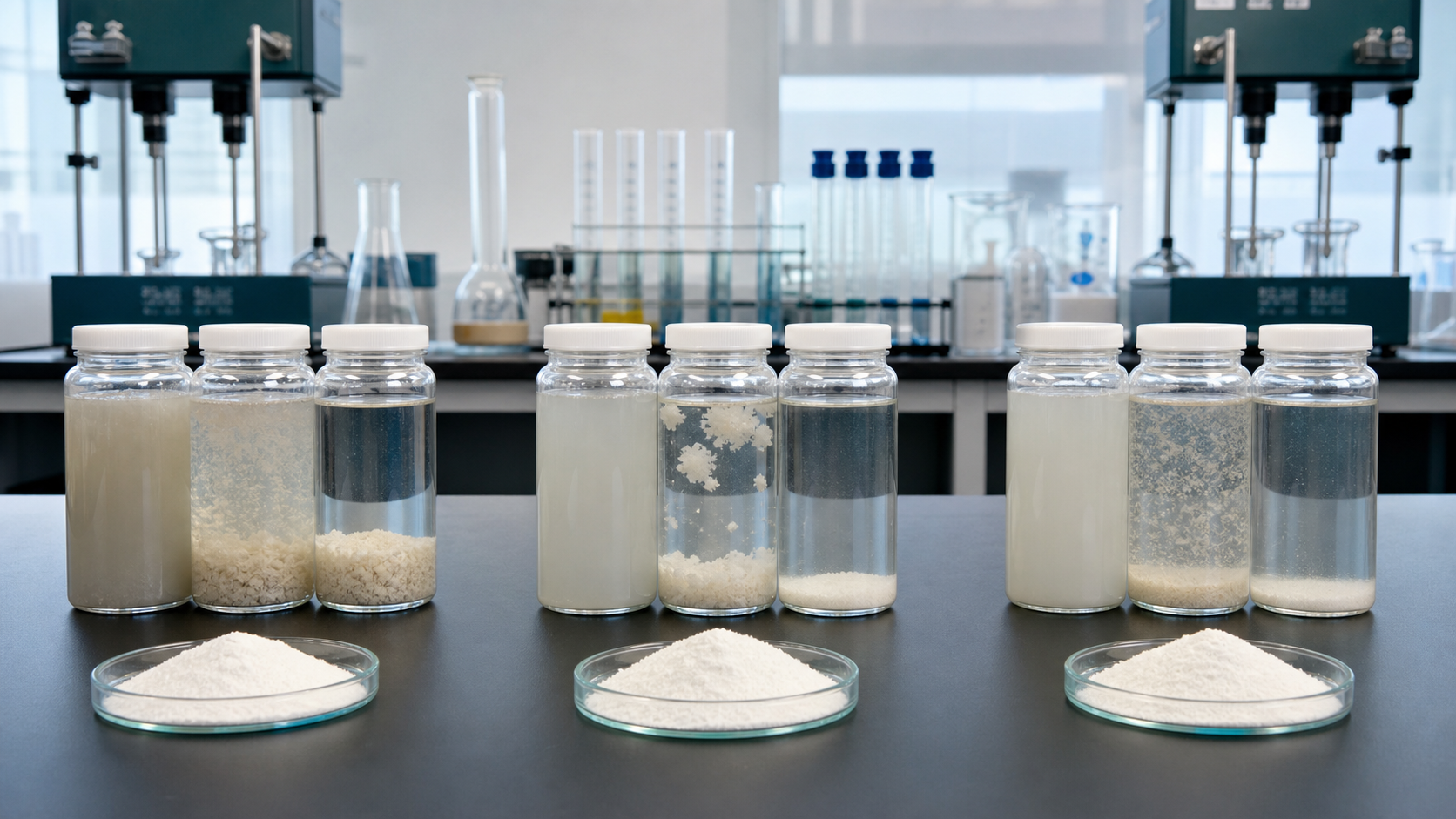
Explain whether PAM would support settling, flotation or another solids-removal stage and what follows it. Separate visible floc formation from removal of dissolved material or other quality requirements. The treatment team should specify the measurements needed for acceptance rather than relying solely on a photograph of a less cloudy sample.
Discuss the feed and current chemistry with Xinqi Polymer. The polyacrylamide product supply range provides a starting point for sample availability, while suitability depends on the particular candidate and the wastewater conditions. Avoid asking for one universally correct ionic type based only on the laundry industry name.
Keep foaming and solids behaviour in the record
Observe foam, floc formation and the way separated material leaves the unit. Record whether the trial required changes to upstream chemistry or mechanical operation. A visually improved liquid may still be difficult to operate if float removal or solids transfer becomes unstable.
Use consistent polymer preparation and commercial-dose reporting across candidates. Test representative feed conditions rather than repeatedly refining a result on one convenient sample. If the plant's cleaning programme changes during the trial, identify it before comparing product consumption or assigning a performance difference to the polymer.
Request a staged purchase
Separate a screening sample set from a controlled plant-trial quantity and from repeat supply. Keep the reference of each tested product attached to its results and delivery proposal. A qualified order should state the observed operating envelope and the conditions requiring review, giving purchasing a practical decision without overstating what a short sample exercise has established.