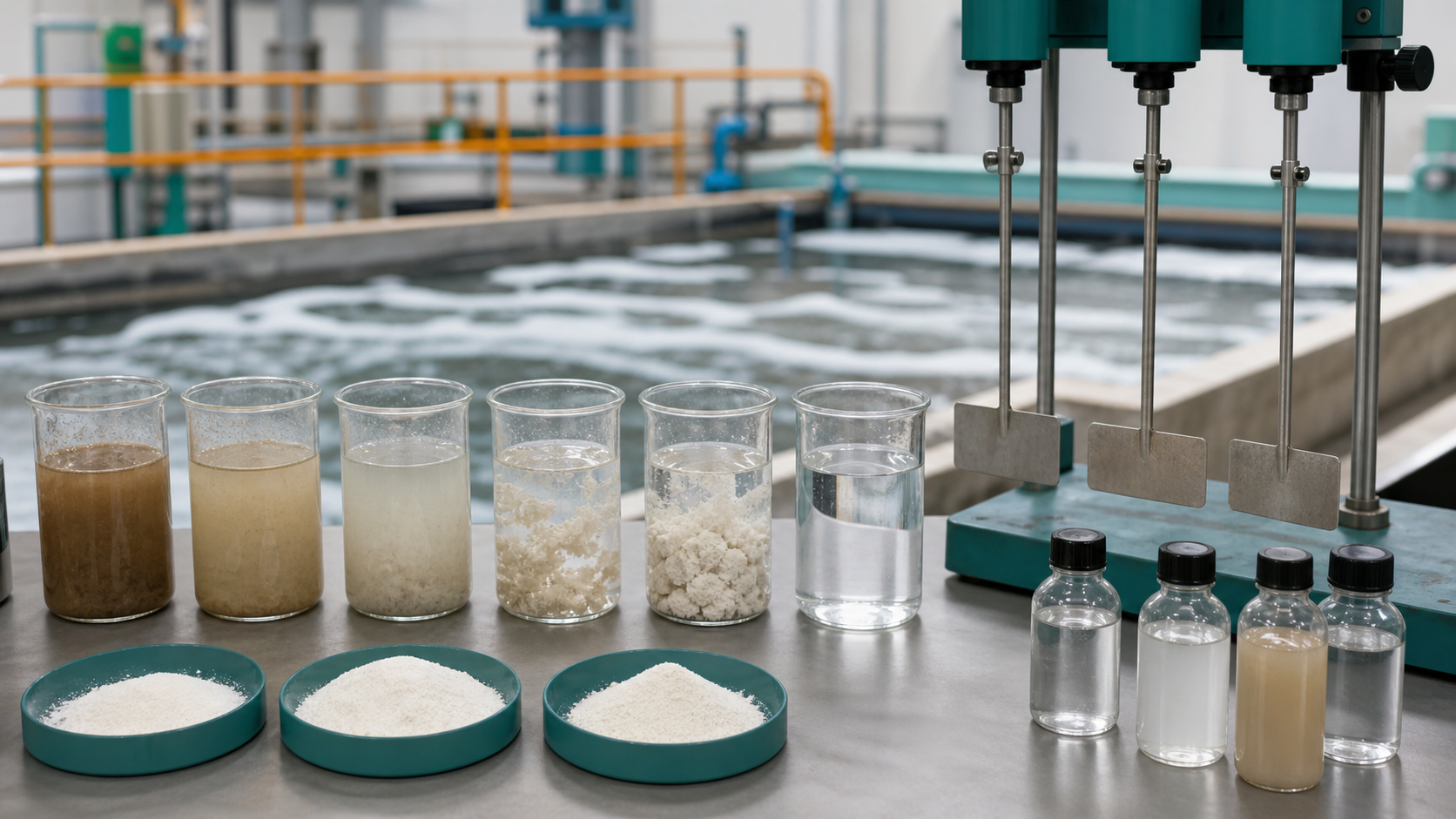
Polymer stock solution dilution can introduce a larger error than the difference between two candidate products. A calculation based on commercial product mass is not interchangeable with one based on active polymer. Before pipetting into a jar, state what the stock concentration means and check that the delivered volume is within the measuring device's reliable range.
Write the concentration basis on the bottle
A label should include product identity, batch reference, preparation date and time, concentration and its basis. Distinguish mass per liquid volume from a mass fraction. If using a volumetric addition of a commercial liquid, a verified density may be needed to relate volume to product mass. Do not assume that all emulsions contain the same active fraction or density.
As a calculation example, a stock containing 1 mg of commercial product per mL delivers 1 mg when 1 mL is added to a 1 L jar: a nominal dose of 1 mg/L on a commercial-product basis. If the stock instead represents active polymer, that label must say so. The example explains the arithmetic; it is not a preparation concentration recommendation for a particular grade.
Choose practical dosing volumes
Very concentrated stocks can require volumes too small for a reliable manual addition. Dilution may make the test more reproducible, but it must follow the formulation's preparation instructions and be mixed consistently. Check whether the selected pipette or dispenser can handle the solution's viscosity. A device calibrated for water does not automatically deliver a viscous solution with the same accuracy under every technique.
Obtain preparation details from Xinqi Polymer for the product actually being tested. A PAM supplier reference cannot supply missing batch-specific active content. The site's articles distinguish preparation quality from the separate question of finding a treatment dose window.
Prevent carryover between candidates
Use clean, compatible preparation vessels and a method that avoids transferring one polymer into another stock. Keep caps and labels with the correct bottles. Do not return unused measured solution to the original stock when it may have contacted other material. Follow the product safety information for handling, spills and disposal; diluted polymer can still make surfaces dangerously slippery.
Record the sequence of preparation and testing. Comparing a freshly prepared candidate with a reference held under different conditions can introduce an uncontrolled variable. If the test spans several sessions, use a documented plan for solution age and any necessary fresh preparation rather than relying on a bottle that happens to remain on the bench.
Check the worksheet before ranking products
Recalculate one low and one high dose independently. Record actual jar volume, stock concentration and addition volume, keeping units visible through the calculation. Retain raw observations and identify any uncertain addition. A repeat test is more defensible than selecting a supplier from a dose-response curve whose concentration basis cannot be reconstructed.