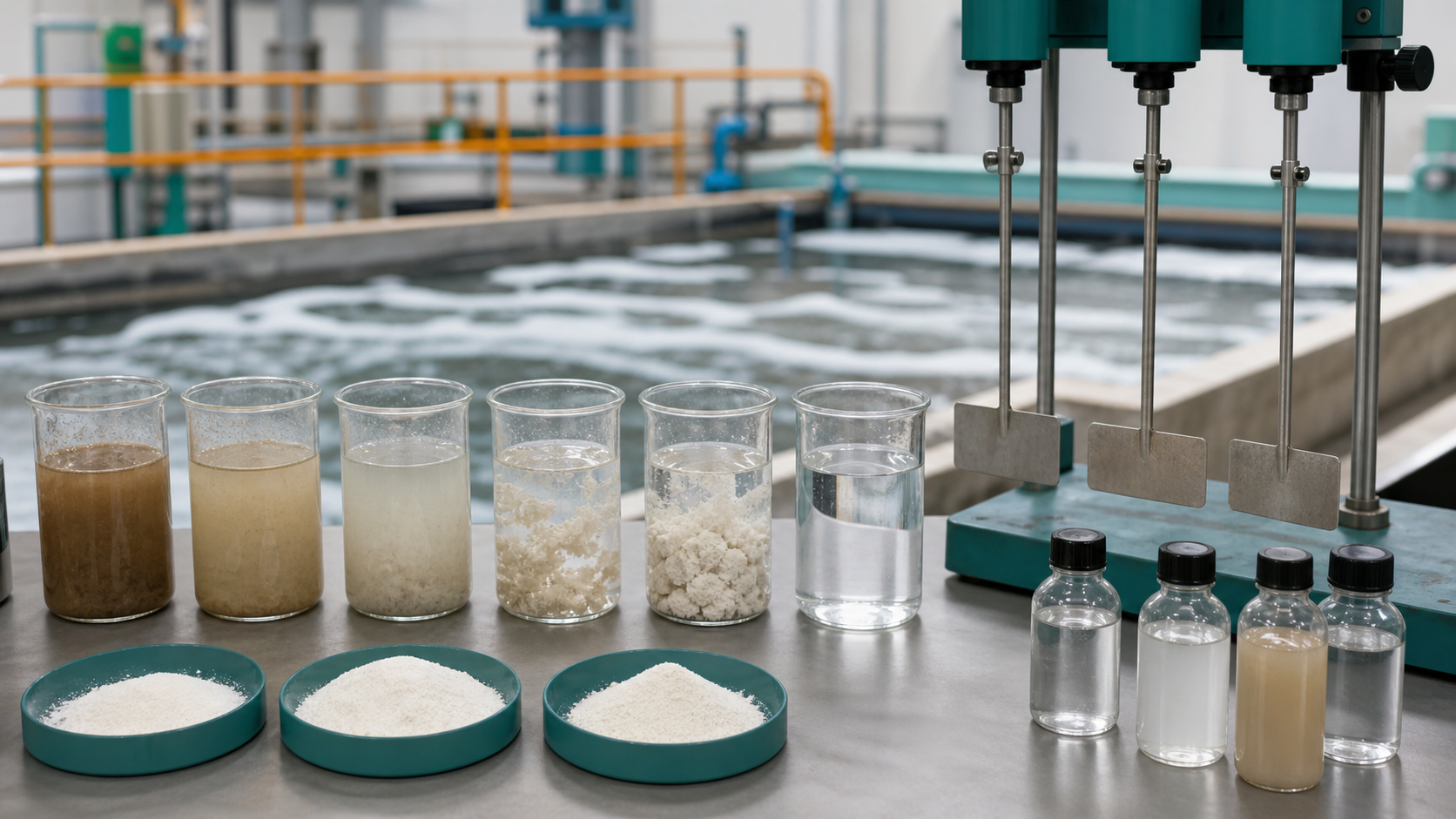
Polymer fisheyes are gel-coated lumps with incompletely wetted material inside. They can appear when dry powder reaches water in concentrated clumps rather than as dispersed particles. Extending the holding time may not reliably correct the original wetting fault. Find where the lumps first appear before replacing the polymer or installing a more aggressive mixer.
Inspect the first contact with water
Compare the powder feeder output with the wetting device's intended loading range. Bridging followed by a sudden powder surge can overwhelm a system that works adequately at its average rate. Check for moisture in the hopper, an irregular feed pattern and interruptions in wetting water. Perform inspection and maintenance only with the required isolation and exposure controls.
Collect observations at the wetting outlet and later preparation stages using the system's safe sampling provisions. Lumps already present at the first outlet point toward dispersion rather than insufficient downstream residence alone. Lumps appearing only later require a different investigation, including contamination and transfer conditions. Do not reach into an operating feeder or mixer to retrieve material.
Compare against a correctly prepared small batch
Prepare a reference solution according to the exact product instructions, using measured powder and water. The purpose is to test whether the product can hydrate normally under controlled preparation, not to invent a universal concentration or mixing time. Keep temperature, water source and batch age in the comparison record.
Ask Xinqi Polymer for the selected grade's preparation requirements and describe the actual wetting equipment. A dry PAM manufacturer reference helps with product questions but cannot determine the capacity of an unidentified wetting device. Review the site's article library for the separate issues of solution aging and dilution-water quality.
Do not use shear as a cosmetic fix
Breaking visible lumps with excessive mechanical energy does not demonstrate that the solution has the intended treatment performance. It may also damage sensitive polymer chains. Stay within supplier and equipment guidance. Likewise, screening out lumps may protect a pump but does not establish the active polymer concentration of the solution that remains.
Quantify rejected material where the plant procedure allows and compare chemical consumption with useful solution production. If the loss is substantial, the nominal bag-to-water concentration overstates what the dosing line actually delivers. This helps explain why operators may continually increase pump speed while treatment remains inconsistent.
Verify stable production after correction
Test feeder regularity and wetting-water availability across the normal operating range, including restart and low-demand conditions. Inspect several consecutive batches rather than accepting one good sample. Record visual condition, preparation history and a treatment comparison on the same wastewater. Close the fault only when the preparation system repeatedly delivers usable solution without unexplained residue or dose drift.