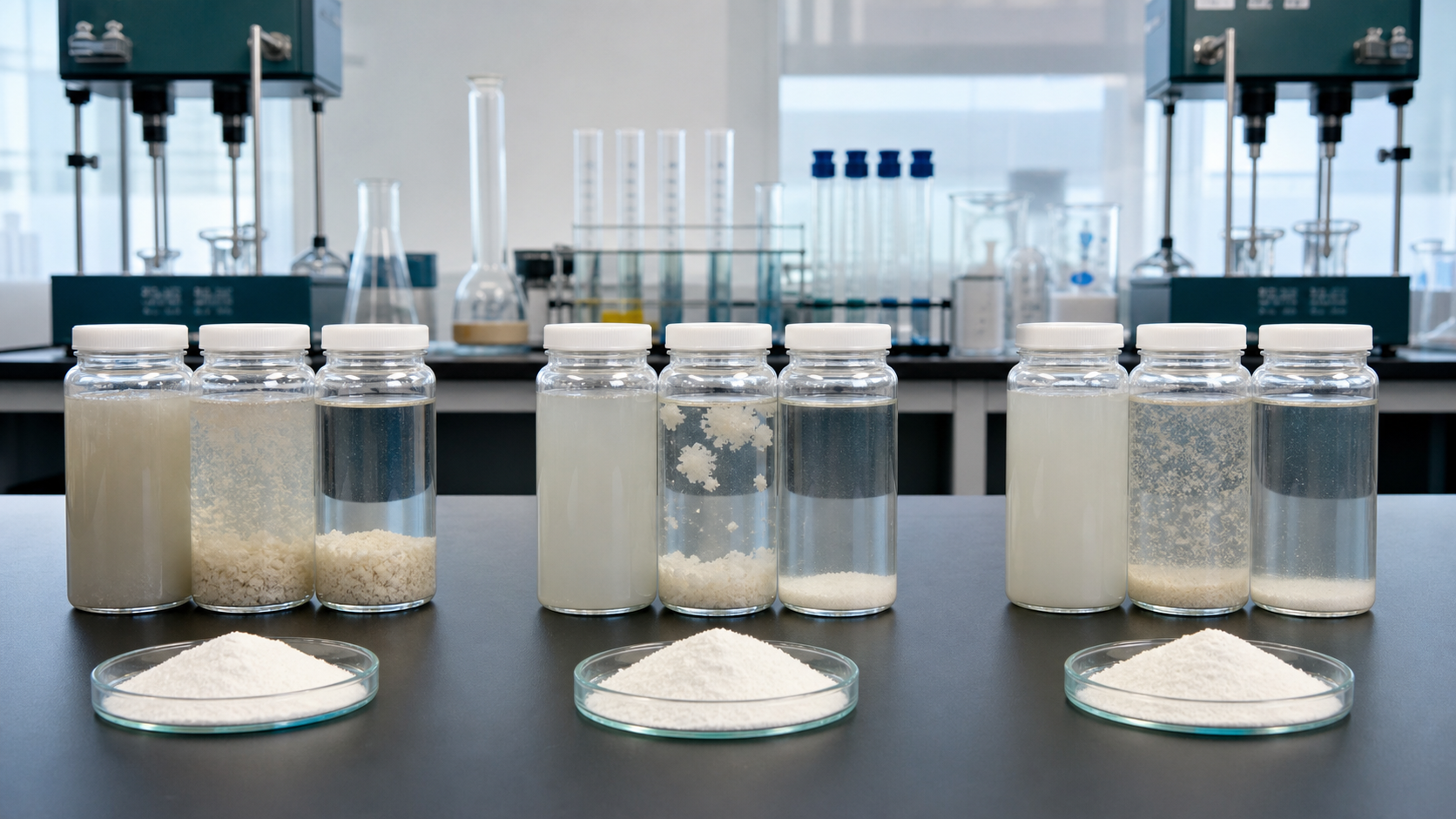
A polymer programme that deteriorates immediately after equipment cleaning deserves a contamination investigation. Residual cleaning chemicals, changed make-down water or a shared transfer hose can alter preparation and treatment behaviour. The timing is a clue, not proof: a production restart can also change the wastewater itself. Compare these routes before rejecting the polymer batch.
Reconstruct the first affected batch
Record the last satisfactory preparation batch, the cleaning work performed and the first abnormal result. Identify every vessel, hose and water connection involved. Ask whether cleaning liquid could remain in a low point or enter a common service line. A tank that looks empty may still contain residue in a transfer pipe or pump casing.
Use the cleaning chemical's safety information and the system's approved return-to-service procedure. Do not mix unknown residues with concentrated polymer as an informal compatibility test. If oxidising chemicals are involved, consult the product and equipment suppliers about compatible verification methods and rinse acceptance; there is no universal safe residual concentration for all formulations and systems.
Compare clean preparation and changed wastewater
Prepare a controlled reference with an appropriate known water source and clean equipment under supplier instructions. Test it on the same representative wastewater as the suspect preparation. This helps separate preparation quality from a changed process stream. If both preparations fail similarly, expand the investigation upstream rather than continuing to alter the make-down equipment without evidence.
Give Xinqi Polymer the cleaning product identity and exposure route when seeking technical advice. General nonionic and other PAM information does not establish chemical compatibility. Consult the flocculation articles for dilution-water and preparation controls that should remain consistent during the comparison.
Do not equate viscosity with effectiveness
A visible change in solution texture is worth documenting, but an apparently normal solution can still perform differently. Compare treatment response using a defined test, not only a visual inspection of the preparation tank. If a laboratory analysis is needed, ask the supplier which method is suitable and how the sample should be collected and stored.
Avoid compensating indefinitely by increasing the dose. If preparation is impaired, a higher pump setting can conceal chemical waste while creating downstream carryover. Keep the plant within its authorised operating limits and use a known acceptable preparation route or approved contingency when the suspect system cannot be verified.
Prevent a repeat after the next clean
Label dedicated hoses, document rinse verification and assign responsibility for returning the system to service. Include the preparation circuit in the cleaning handover, not just the visibly cleaned tank. Close the incident with a trial showing repeatable performance after the verified rinse, and retain the batch chronology so future failures can be compared against evidence rather than memory.