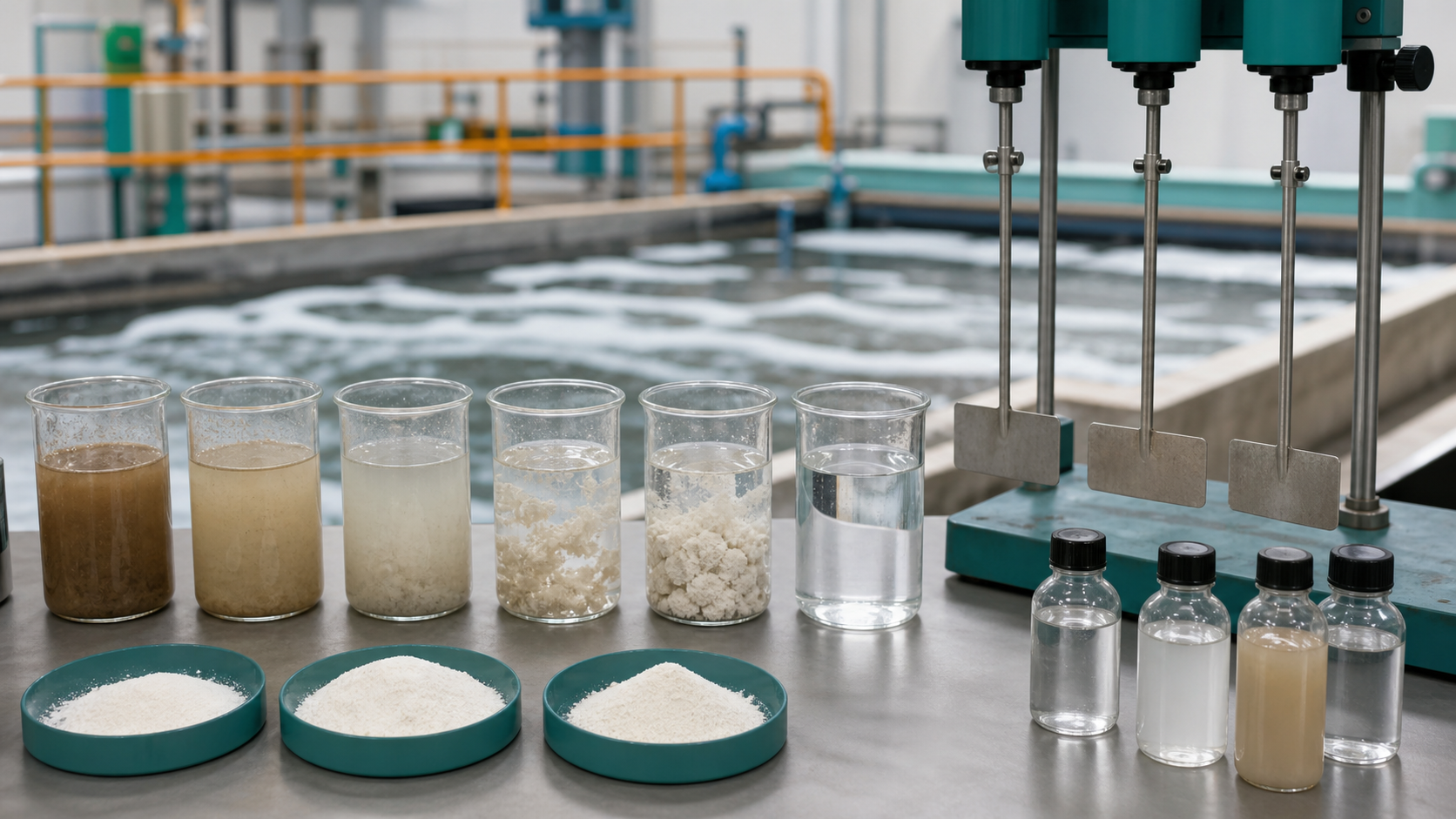
Paint-booth wash water is not a single uniform wastewater. Paint systems, cleaning practices and the upstream chemical programme can change the behaviour of material reaching separation. A flocculant sample request should define that treatment stage and avoid assuming that PAM alone performs every function needed to collect and handle paint-related solids.
Explain the current treatment sequence
Describe the wash-water collection system, the chemicals used before flocculation and the method of solids removal. Ask operating staff to identify where the present difficulty occurs: incomplete separation, difficult floating material, poor transfer or another observed limitation. Do not replace the process description with a colour photograph and a request for the strongest polymer.
List the paint and cleaning conditions represented by the sample at an appropriate level for supplier evaluation. Avoid sending confidential formulations through a public enquiry form. If detailed proprietary information is needed later, agree a suitable exchange route with the business team.
Keep colour and separable solids distinct
The colour and suspended-solids guide explains why visual appearance alone is an incomplete endpoint. Define which liquid-quality checks and solids-handling observations matter at this plant. Keep other treatment duties and required checks in the plan rather than assuming that a visibly improved sample establishes complete suitability for reuse or disposal.
Provide the treatment sequence to Xinqi Polymer when discussing candidates. A review of cationic polymer products can support screening questions, but the supplier should connect the proposed reference to actual testing instead of treating the wastewater name as proof of compatibility.
Record the handling consequences
Observe how the separated material behaves in the installed removal and transfer equipment. Record any dependence on changed upstream treatment or temporary mixing equipment. A demonstration that produces a distinctive floc is not sufficient if the plant cannot remove that material consistently during normal operation.
Use the product's specific preparation instructions and maintain comparable dose reporting. Include representative production changes where these are part of the intended approval. If only one operating condition has been tested, state that limitation explicitly in the sample review.
Define the first supply decision
Ask for the commercial reference, product documents, packing and the qualification steps still outstanding. Separate the amount needed for a controlled plant trial from a forecast production order. The purchasing record should identify the polymer's demonstrated role and the other process conditions required to reproduce it, without turning a limited sample demonstration into a universal paint-wastewater claim.