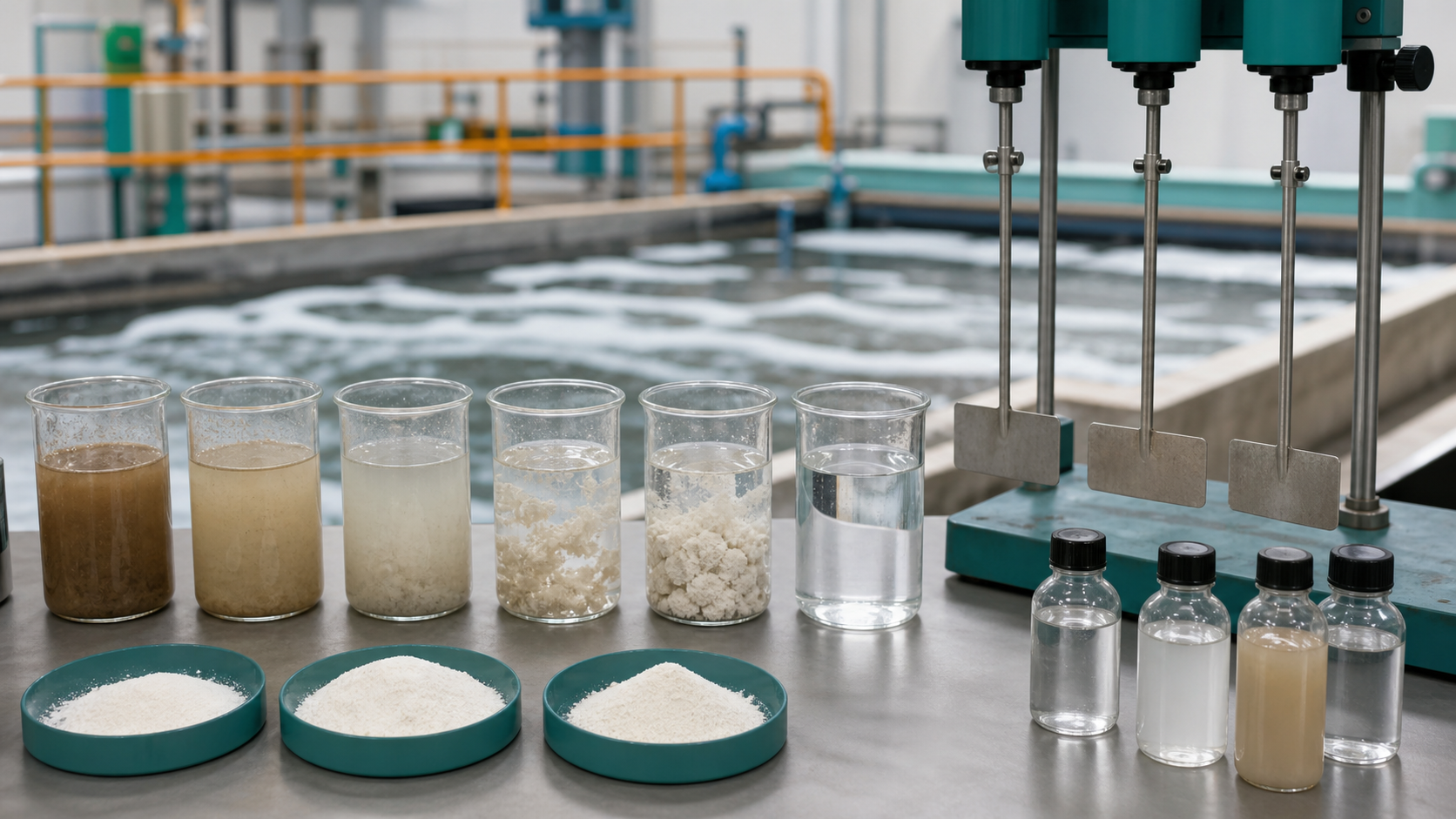
A free flocculant sample and a paid trial package may include different things. Before comparing offers, identify the material, the testing support and any commercial conditions attached. The useful purchasing question is whether the sample programme can answer the plant's qualification needs, not simply whether the first container carries a price.
Define the question the sample must answer
State the treatment problem, the intended separation equipment and the operating conditions to be represented. Decide whether the request is for initial laboratory screening or a controlled plant trial. These stages can require different quantities and support, so avoid asking for an unspecified sample and expecting a complete production recommendation in return.
The supplier sample comparison guide helps keep the evaluation consistent. List the information needed with each sample: reference, product form, preparation instructions and the relationship to the material quoted for subsequent supply.
Ask what the offer includes
When discussing samples with Xinqi Polymer, request confirmation of available quantity, dispatch arrangements and any charges or conditions. Do not assume a universal free-sample policy, guaranteed dispatch time or a commitment to provide on-site support. Use the factory supply information as context, then confirm the details of the actual offer.
Separate the cost of material, shipment, laboratory work and technical attendance where applicable. Ask what report or follow-up will be provided. A paid offer is not automatically more rigorous, and a free offer is not automatically equivalent to a complete qualification service.
Keep commercial influence out of the test result
Record the sample identity and apply the agreed comparison procedure regardless of whether the sample was charged. Where supplier identity could influence judgement, use the site's controlled evaluation approach. Do not accept a result solely because substantial effort has already been invested or because a supplier provided material without charge.
Clarify whether accepting the sample creates any later purchasing obligation. Keep technical qualification and commercial award as separate decisions. If the plant cannot run the promised test within the required period, communicate that constraint instead of producing a rushed and misleading conclusion.
Record the next decision explicitly
After screening, state whether the candidate is rejected, needs more work or is ready for a plant trial. Keep the production grade and proposed supply terms linked to that status. A well-scoped sample purchase reduces ambiguity for both sides and avoids treating the cost of the sample as a proxy for treatment performance or a commitment to future volume.