A request for a shear-resistant flocculant is incomplete unless it identifies what is being sheared and where. Damage to prepared polymer solution is different from breakage of floc already formed in wastewater. Define the actual equipment route before purchasing a grade on a general claim of strength or robustness.
Locate the exposure being evaluated
Map the polymer preparation and transfer route separately from the wastewater route after addition. Record pumps, mixers, restrictions and recirculation where relevant. Establish whether operators observe poor solution performance before dosing or floc that forms and then breaks later. These observations lead to different qualification questions.
The floc-breakage guide helps structure the diagnosis. Retain equipment operating and safety limits during investigation. Do not create an arbitrary aggressive test simply because it produces a dramatic visual difference between samples.
Define a reproducible comparison
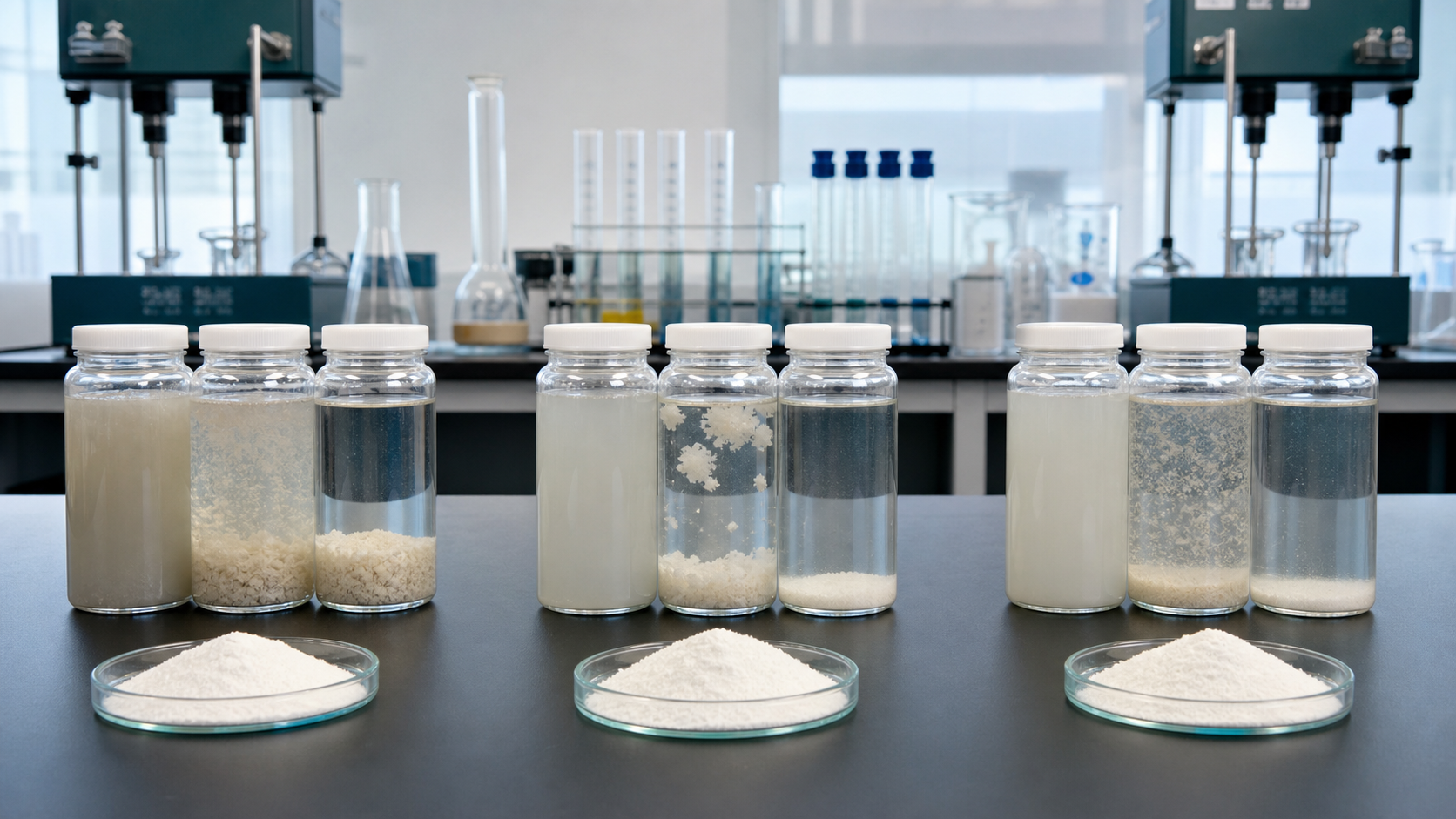
Agree the important conditions to represent in screening, including preparation, dose basis and the point at which the separation result is judged. Use a current-treatment reference where practicable. Describe the limitations of the bench procedure rather than assuming that every mixer speed has a direct equivalent in plant pipework.
Discuss the route with Xinqi Polymer and ask why each candidate is proposed. Information on polyacrylamide manufacturing provides context, but a broad polymer description or impressive molecular-weight number does not replace evidence from the relevant handling conditions.
Measure useful separation after exposure
Compare the liquid quality and solids behaviour after the defined transfer or mixing step. Large floc before exposure may not predict the outcome at the separator. Equally, smaller visible floc is not automatically a failed treatment if the actual separation and handling requirements are met.
Keep changes in equipment operation separate from changes in product. If the best result depends on reducing shear or moving addition downstream, identify that as part of the proposed solution. Purchasing should understand whether the offer concerns a better chemical fit, an operating change or both.
Make approval conditional on the observed route
Retain the equipment settings and sampling locations with the trial report. Without those details, a later repetition may apply a different exposure while appearing to repeat the original qualification.
Record the qualified product, preparation method, equipment conditions and the result accepted by the plant. Require review after a significant transfer-route change. A defensible purchase establishes performance under known conditions; it does not claim that the product is immune to mechanical damage or that polymer selection removes every need to manage mixing and transfer properly.