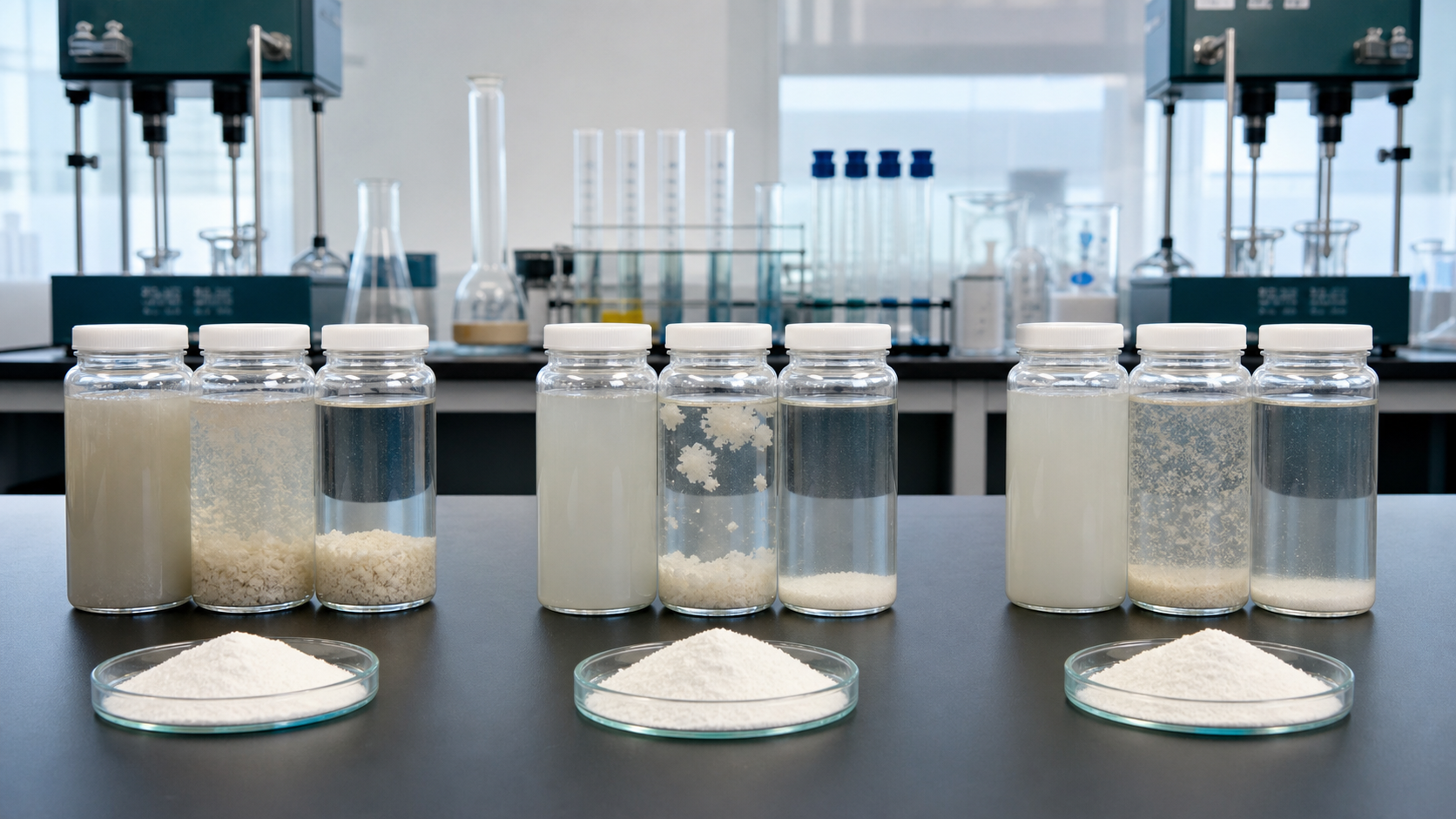
A clear jar can still produce water that blocks a downstream filter quickly. Fine carryover, residual treatment chemicals and the structure of material reaching the filter can matter more than the appearance of the settled supernatant. If filtration is the next process, include a filterability assessment in the flocculant trial instead of ranking products on turbidity alone.
Define which filter you are protecting
A coarse protection strainer, a depth-media filter and a membrane do not behave alike. Identify the actual downstream device and its manufacturer's feed requirements. A laboratory paper-filter result may be useful for comparing candidates, but it cannot be treated as a direct prediction of membrane fouling or full-scale run length without validation.
Document the normal filter load and the symptom of concern: rapid pressure rise, shorter runs, difficult cleaning or poorer filtrate. Include flow, temperature and feed quality when comparing historical performance. Otherwise a filter operated at a higher rate may appear to have deteriorated chemically when the test conditions simply changed.
Hold the test conditions constant
Use the same medium, effective area, sample volume and pressure or gravity head for each comparison. Select supernatant at an equivalent settling time and depth without disturbing the sludge. Include untreated or currently treated water as the relevant control. Record both filtered volume over time and the condition of the filtrate using the agreed methods.
Share those conditions when asking Xinqi Polymer to interpret candidate results. Product-family information from an anionic polymer resource does not guarantee compatibility with a particular downstream filter. The flocculation article library also covers residual carryover, which should be considered separately from particles that escaped settlement.
Investigate a clarity-filterability disagreement
If one candidate gives lower turbidity but faster blockage, repeat the test before concluding it is inferior. Check sample handling, dose basis and the possibility that a small quantity of settled sludge entered one sample. If the pattern persists, preserve samples for appropriate analysis and consult the filter or membrane supplier about likely foulants and suitable compatibility testing.
Do not apply a universal silt-density or turbidity limit to every process. Such limits are method- and equipment-specific, and some high-solids waters are not suitable for a given test. The acceptance criterion must belong to the actual downstream application, not to a convenient number copied from a different treatment train.
Run a bounded plant confirmation
Use a controlled side-stream or approved production trial that can be isolated if filter performance deteriorates. Compare equivalent throughput and record cleaning recovery as well as the initial pressure response. A useful flocculant choice is one that produces acceptable separation and preserves the next process, even if it is not the visually clearest jar in the first screening photograph.