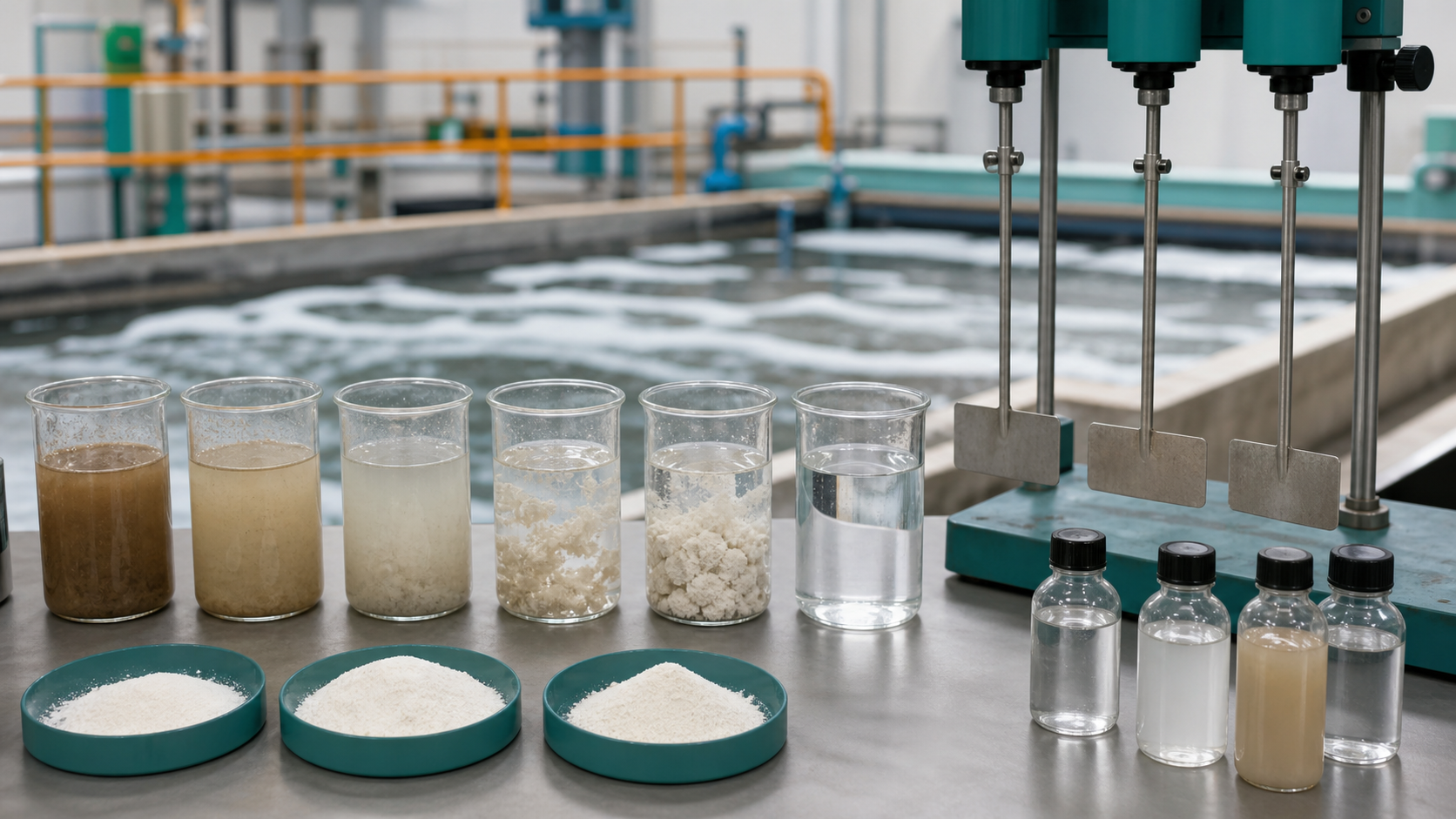
A dairy DAF flocculant purchase should describe the wastewater arriving at flotation, not just the factory's daily milk throughput. Product losses, wash water and cleaning events can create materially different feeds. Purchasing a PAM grade against one convenient sample risks qualifying the easiest condition while leaving the difficult part of the operating cycle untested.
Separate production feed from cleaning events
Ask the plant team which streams enter equalisation and whether cleaning discharges are blended or handled separately. Record the operating condition represented by each sample, including existing pH control and coagulant additions. Keep an unusual cleaning event identifiable rather than hiding it in an unexplained average sample.
State which conditions the proposed polymer must handle in normal operation. If an abnormal discharge requires diversion or other treatment, retain that operating control. A flocculant offer should not imply that a change of grade makes every upstream event acceptable for the flotation unit.
Qualify flotation, not settling alone
Tell the supplier about the DAF arrangement, polymer addition point and available contact time. A settling beaker can support initial screening, but it does not reproduce all aspects of air-assisted separation or surface float removal. Review the DAF timing guide when defining the next stage of testing.
Send the operating brief to Xinqi Polymer and ask for named candidates with preparation instructions. The cationic PAM product family may be relevant to screening organic solids, but the dairy label alone does not establish the best ionic type, charge or commercial dose.
Include the removed float in acceptance
Define the clarified-water measurements needed by the next treatment stage, and identify the float-handling conditions operators must maintain. Record skimming, float consistency and any downstream handling restriction during the plant trial. Do not accept a candidate solely because the water looks clearer if the removed material becomes impractical to handle.
Keep upstream chemistry stable during a comparison where possible. If coagulant or pH settings change, record them as part of the treatment combination rather than assigning the whole effect to PAM. Compare commercial-product consumption over matching operating periods and retain the feed condition with each result.
Write a conditional supply release
The order should identify the tested grade, the preparation route and the operating envelope accepted by the plant. Separate sample screening from production approval and request review before any substitute grade is delivered. Include the quantity and destination in the commercial enquiry, but do not allow an urgent delivery request to turn an incomplete flotation test into an assumed qualification.